For decades, code has been king.
Specifications existed to serve code. Product requirement documents (PRDs), architecture diagrams, and technical plans were scaffolding—useful early on, but quickly outdated once “real development” began. Code became the source of truth. Everything else became context at best, drift at worst.
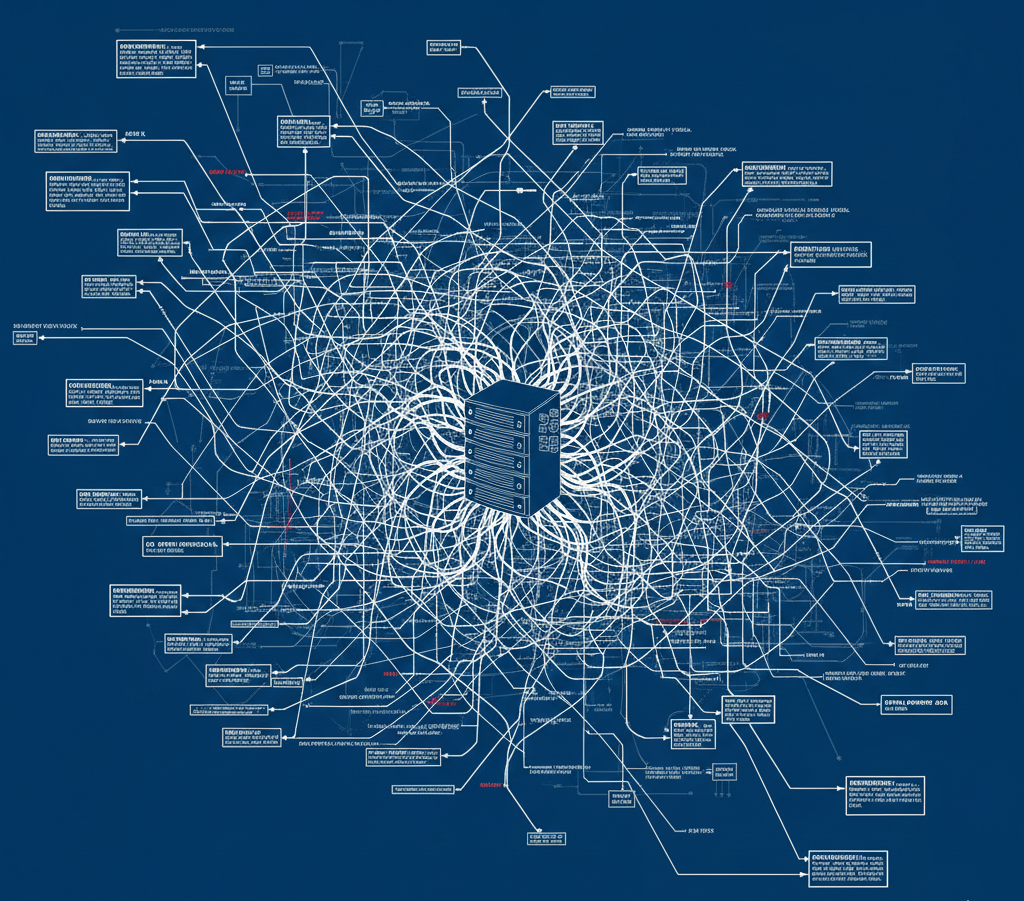
And that gap—between what we intended to build and what we actually built—has haunted enterprise software for generations.
Specification-Driven Development (SDD) inverts this model.
Instead of specifications serving code, code serves specifications.
And for modern enterprises operating at scale, this inversion isn’t just helpful—it’s becoming essential.
The Power Inversion: From Code-First to Spec-First
Traditional development treats documentation as advisory. The PRD guides developers. The architecture document informs implementation. But once code evolves, specs rarely keep up. Over time, systems drift away from their original intent.
SDD eliminates that drift.
In SDD:
- The specification becomes the primary artifact
- Implementation plans are derived from the specification
- Code is generated from those plans
- Tests are generated from acceptance criteria
- Operational feedback updates the specification itself
There is no “gap” to manage—only transformation.
Maintaining software no longer means manually patching code across layers. It means evolving specifications and regenerating implementation.
For enterprises juggling dozens of teams, platforms, frameworks, and vendors, this alignment is transformational.
Why This Matters Now
Three forces make SDD not only possible—but urgent.
1. AI Has Reached a Practical Threshold
AI can now reliably translate structured natural language into working code. But raw generation without structure produces inconsistency and technical debt.
SDD provides the necessary structure:
- Clear specifications
- Explicit acceptance criteria
- Defined architectural constraints
- Test-first mandates
- Versioned documentation
AI becomes an amplifier—not a chaos generator.
2. Enterprise Complexity Has Exploded
Modern enterprise systems integrate:
- Dozens of internal services
- Third-party SaaS APIs
- Cloud infrastructure
- Authentication systems
- Observability stacks
- Regulatory constraints
Manual synchronization between documentation and implementation does not scale at this level of complexity.
SDD creates systemic alignment:
- Requirements trace to architecture
- Architecture traces to contracts
- Contracts generate tests
- Tests drive implementation
Every layer maps back to intent.
3. The Pace of Change Has Accelerated
Enterprises no longer operate on multi-year product cycles.
Markets shift.
Compliance rules change.
AI capabilities evolve monthly.
Competitors ship weekly.
Traditional SDLC treats requirement changes as disruptions. Each pivot requires manually updating documents, code, tests, and deployments.
SDD treats change as regeneration.
Change a requirement → regenerate the implementation plan → regenerate contracts and tests → regenerate code.
Velocity is maintained because alignment is automatic.
What SDD Looks Like in Practice
In an enterprise SDD workflow:
- An idea becomes a structured specification.
- AI assists in clarifying edge cases and ambiguities.
- Research agents gather:
- Security implications
- Performance benchmarks
- Organizational constraints
- Approved technology standards
- Implementation plans map business requirements to technical decisions.
- Contracts and test scenarios are generated before code.
- Code is generated to satisfy tests.
- Production metrics feed back into specification updates.
This is not documentation-heavy waterfall. It is continuous specification refinement.
Specifications become versioned artifacts.
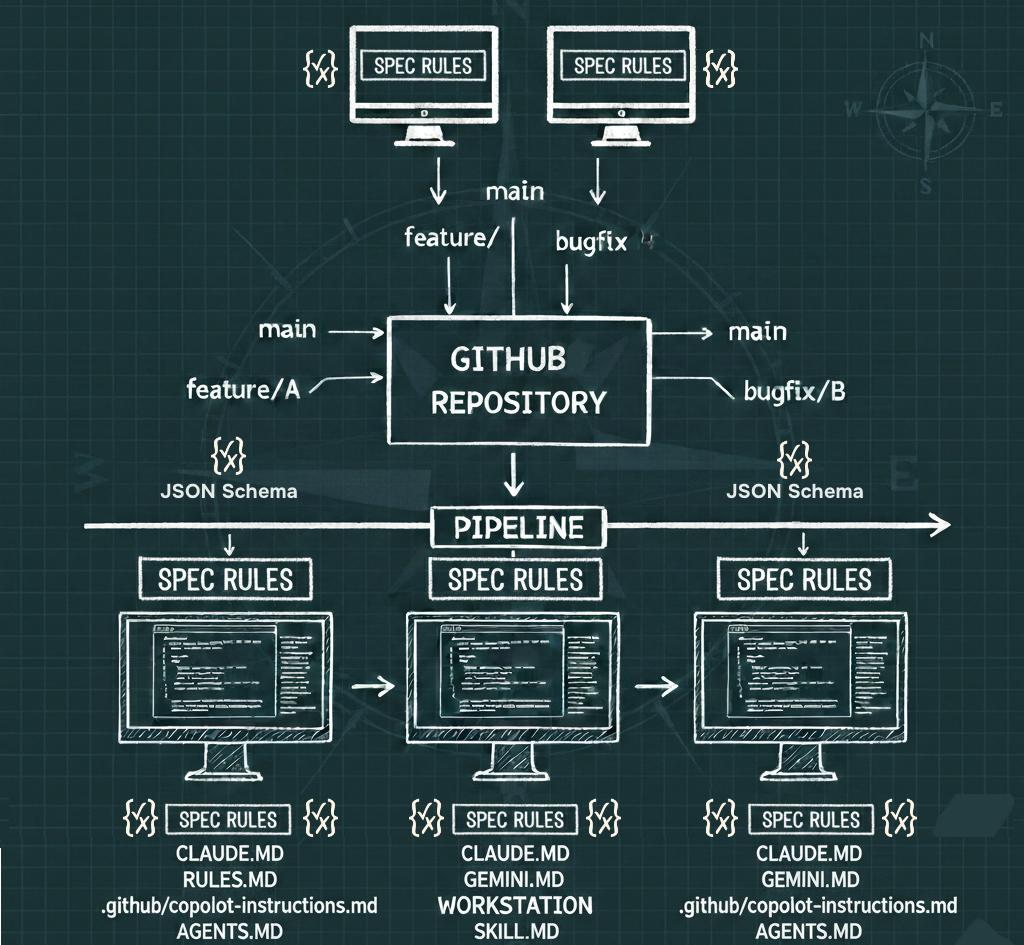
Branches represent feature explorations.
Multiple implementation approaches can be generated from the same spec to optimize for:
- Performance
- Cost
- Maintainability
- User experience
Enterprises gain optionality without fragmentation.
The Enterprise Advantage: Governance by Design
SDD enables something enterprises struggle with: consistent governance without slowing innovation.
Through constitutional principles and architectural gates, organizations can enforce:
- Library-first modular design
- Test-first development
- Simplicity constraints
- Anti-abstraction discipline
- Integration-first testing
- CLI-based observability
- Framework trust over custom wrappers
Instead of policing code after the fact, guardrails are embedded into the specification and planning phase.
Governance shifts left.
Quality shifts left.
Security shifts left.
Without creating process bottlenecks.
Template-Driven Discipline: Constraining AI for Quality
One of the most powerful aspects of SDD is how structured templates shape AI behavior.
Templates:
- Prevent premature implementation details
- Force explicit ambiguity markers ([NEEDS CLARIFICATION])
- Require measurable acceptance criteria
- Enforce test-first ordering
- Discourage speculative features
- Validate constitutional compliance through gates
These constraints transform AI from a creative guesser into a disciplined specification engineer.
The result:
- Complete specifications
- Unambiguous requirements
- Traceable decisions
- Maintainable architecture
- Regenerable systems
For enterprises operating under audit, compliance, and scale pressures, this level of structured generation matters.
Debugging Becomes Specification Correction
In traditional development:
- Bugs are fixed in code.
- Root causes are often misaligned intent.
In SDD:
- Bugs indicate specification or planning flaws.
- The fix happens at the source.
- Regeneration propagates corrections consistently.
Refactoring becomes specification clarification.
Technical debt becomes spec ambiguity.
Innovation becomes controlled exploration through branching.
The team’s focus shifts from mechanical translation to creativity, experimentation, and critical thinking.
Strategic Implications for Enterprises
SDD changes enterprise software economics.
1. Reduced Drift
Specifications remain the living source of truth.
2. Faster Pivots
Regeneration replaces manual rewrites.
3. Built-In Governance
Architectural discipline is enforced automatically.
4. Scalable Knowledge Retention
Intent is captured explicitly in specifications—not buried in code.
5. AI-Ready Architecture
As AI capabilities improve, regeneration quality improves automatically—without rewriting methodology.
This Is Not About Replacing Developers
SDD does not eliminate engineers.
It eliminates:
- Manual translation overhead
- Synchronization drift
- Redundant documentation cycles
- Reactive patchwork updates
Developers move up the stack:
- Clarifying intent
- Designing constraints
- Exploring architectural alternatives
- Interpreting operational feedback
- Improving the constitutional foundation
Creativity increases.
Mechanical work decreases.
The Transformation
Specification-Driven Development represents a fundamental inversion:
Intent becomes executable.
Code becomes the final mile—not the source of truth.
For enterprises navigating:
- AI transformation
- Exploding system complexity
- Accelerating market change
- Governance and compliance pressure
- Integration-heavy ecosystems
SDD offers a systematic way to maintain alignment between what you mean to build and what you actually deploy.
Software development has always struggled with drift between vision and reality.
SDD collapses that distance.
And for enterprises operating at scale, that alignment is no longer optional—it’s strategic.